In today’s digital age, can you imagine manually analyzing vast datasets in the ever-evolving landscape of higher education? Institutions are shifting from traditional analytics to more advanced methods in pursuit of excellence and gaining a competitive edge
Traditionally, higher education relied on manual processes and tedious analysis of extensive datasets. This was not only time-consuming, but also riddled with errors. Enter the era of Data Automation.
Data Automation simplifies data-related tasks by leveraging technology, minimizing human intervention, and significantly reducing the risk of errors. For higher education, this means faster, more accurate insights that can drive institutional strategies and elevate students’ educational experiences.
One specific area of focus within data automation is Data Warehouse Automation (DWA). DWA empowers institutions by streamlining data integration, transformation, and provisioning. The results? Accelerated delivery, cost savings, and more time for data professionals to focus on high-priority tasks.
Why WhereScape is a Game-Changer in Higher Ed Analytics
WhereScape, a leading tool in Data Automation, is tailor-made for higher education institutions’ challenges. Its unique features allow for efficient Data Warehouse Automation, making data more accessible and insights more actionable. The advantages of using WhereScape in the educational sector are numerous, from real-world case studies to quantifiable results.
Why has WhereScape gained such prominence? It’s simple: tangible and intangible benefits. It offers efficiency, and the strategic insights enable institutions to make data-driven decisions, enhancing countless students’ academic journeys.
Decoding WhereScape’s Role in HigherEducation Data Automation
In the realm of higher education, there’s a vast amount of data, ranging from student academic performance to research data and administrative information. WhereScape acts as a powerful tool to help organize this information. It provides educational institutions with the tools they need for the rapid creation, updating, and management of data warehouses without intricate coding.
Thanks to intuitive interfaces and automation, universities can quickly adjust to changes and optimize resources to ensure data transparency for all stakeholders. Thus, WhereScape simplifies data handling and enables educational establishments to respond swiftly and accurately to academic and administrative needs.
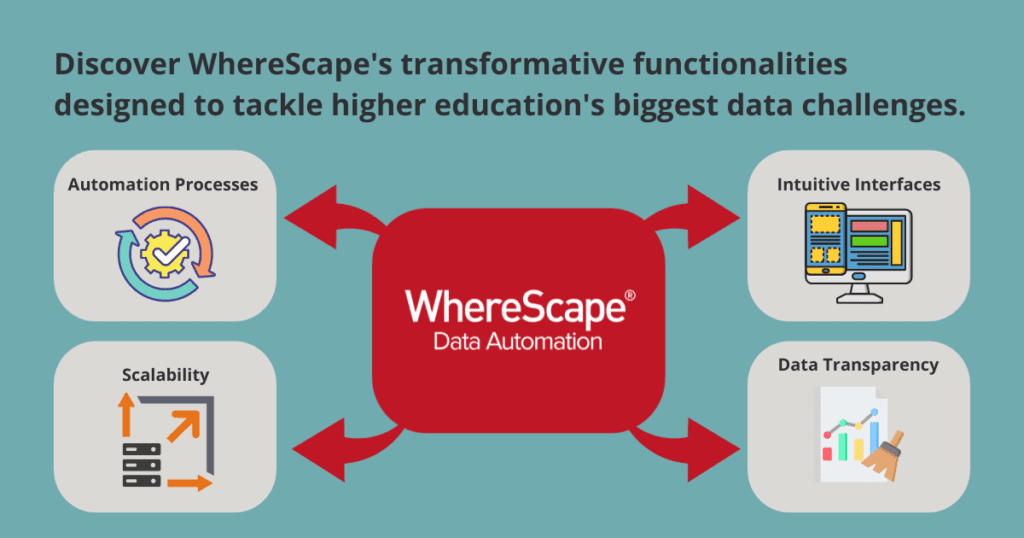
Here are some key functionalities and the challenges they address:
- Automation Processes: Minimizes the need for manual coding, speeding up development and ensuring more reliable outcomes.
- Challenge: Time expenditure on manual coding and increased error risks.
- Intuitive Interfaces: Facilitates effortless creation and management of data warehouses, even without deep coding expertise.
- Challenge: The complexity of using traditional data storage systems.
- Scalability: Guarantees the solution remains effective even when there’s an increase in data volume or the needs of the educational institution.
- Challenge: Limited growth opportunities when using outdated systems.
- Data Transparency: Enables real-time data viewing and analysis, enhancing decision-making.
- Challenge: Delays and inaccuracies due to outdated or disjointed systems.
WhereScape not only eases data work but also allows educational establishments to respond more quickly and accurately to academic and administrative needs.
Looking Ahead: Dive Deeper into the World of Data Automation
Intrigued by the transformative power of Data Automation in Higher Education? Here’s an opportunity you don’t want to miss! Join us on Wednesday, November 1, 2023, at 10:00 am CT (16:00 CET), for a special webinar: “Transforming Higher Ed Analytics: The Power of WhereScape’s Data Automation”. Gain insights from real-world scenarios, deep dive into the nuances of DWA, understand the unique features of WhereScape, and much more.
However, if you’re reading this post-webinar, stay tuned! We’ll soon update this space with a link to the webinar recording, ensuring you don’t get all these invaluable insights.