Select Page

The Role of Clean Data in AI Success: Avoiding “Garbage In, Garbage Out”

By Patrick O Halloran
| February 5, 2025
The Role of Clean Data in AI Success: Avoiding “Garbage In, Garbage Out”

Co-authored by infoVia and WhereScape

Artificial Intelligence (AI) is transforming industries across the globe, enabling organizations to uncover insights, automate processes, and make smarter decisions. However, one universal truth remains: the effectiveness of any AI system is only as good as the quality of the data powering it. This is where the principle of “garbage in, garbage out” becomes critically important.

In today’s data-driven world, ensuring your AI models are trained on clean, reliable, and accurate data isn’t just a best practice—it’s essential for success.

Why Clean Data Matters for AI

The Role of Clean Data in AI Success: Avoiding “Garbage In, Garbage Out”

AI thrives on data. The more comprehensive and accurate the dataset, the better the outcomes. Conversely, poor-quality data—full of inaccuracies, duplicates, or incomplete records—can lead to flawed insights and unreliable predictions, ultimately costing time, money, and trust.

For organizations leveraging AI, clean data acts as the foundation for robust analytics and decision-making. Without it, even the most sophisticated AI models risk perpetuating errors or reinforcing biases hidden within unstructured or unclean data.

WhereScape’s Role in the Clean Data Journey
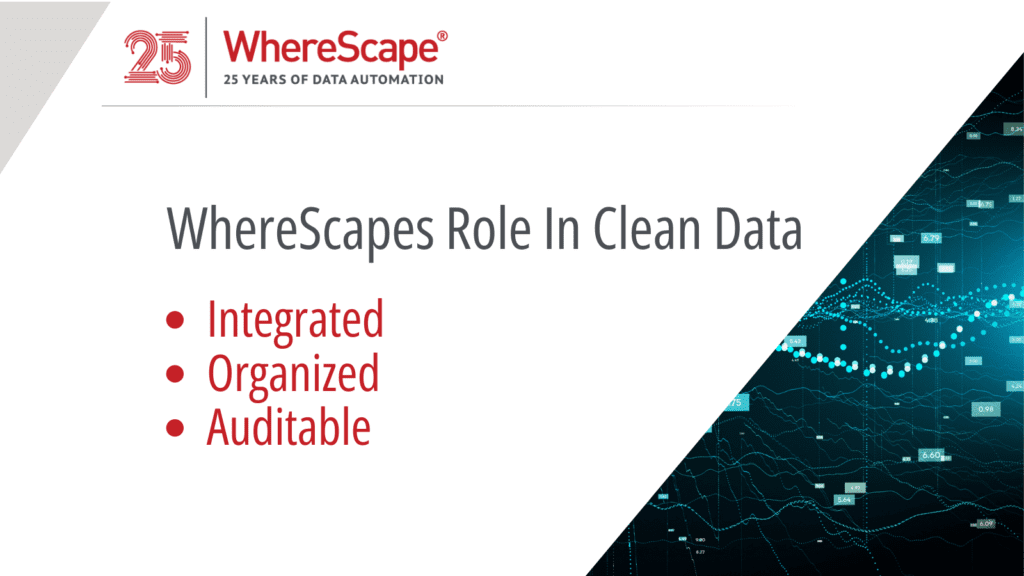
wherescape role in clean data

WhereScape’s data automation platform plays a critical role in enabling successful AI initiatives. By streamlining the development and management of data warehouses, we help organizations centralize, structure, and standardize their data.

WhereScape’s metadata-driven approach ensures that your data is:

  • Integrated: Bringing together data from multiple sources while maintaining consistency.
  • Organized: Structured for seamless analysis and reporting.
  • Auditable: Providing visibility into data lineage and transformation.

This clean, well-documented data environment is the springboard for AI models to function effectively, driving actionable insights without the risk of “garbage in, garbage out.”

infoVia’s Expertise in AI
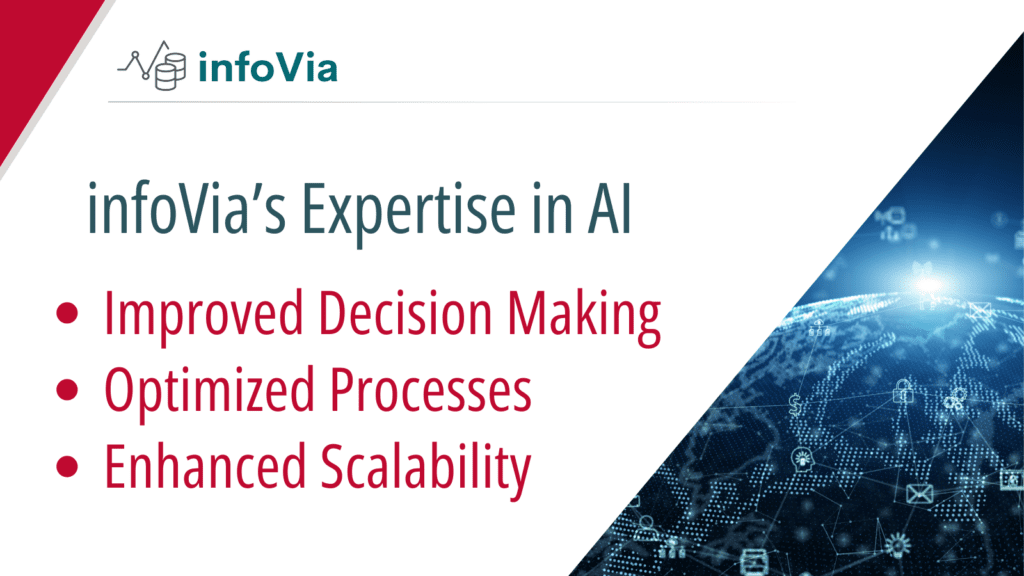
infovia expertise in AI

One of WhereScape’s top partners, infoVia,  brings expertise in developing cutting-edge AI solutions that harness the power of clean data to solve real-world challenges. Their AI-driven tools are designed to analyze, predict, and optimize operations, but they rely on high-quality data pipelines as a critical input.

When paired with WhereScape’s ability to deliver clean, accurate data at scale, infoVia’s AI solutions can help organizations achieve:

  • Improved decision-making: Based on reliable and actionable insights.
  • Optimized processes: With AI models designed to identify and eliminate inefficiencies.
  • Enhanced scalability: Enabling AI systems to evolve alongside growing datasets.

Unlocking AI’s True Potential

By combining infoVia’s AI expertise with WhereScape’s data automation capabilities, organizations can create an end-to-end ecosystem where data and AI work together seamlessly. This partnership enables businesses to innovate, adapt, and thrive in today’s fast-paced landscape.

In the age of AI, clean data isn’t optional for accurate outcomes—it’s a necessity. Together, WhereScape and infoVia are empowering organizations to build their AI initiatives on a foundation of trust, quality, and reliability.
Data Lineage: Why Modern Data Teams Need It More Than Ever

Ask almost any data team where a number came from, and you will usually get one of two answers. Either someone knows immediately, or everyone starts digging through SQL, pipeline logic, wikis, and old messages to reconstruct the story after the fact. That gap is...

SQL Server Integration Services, Without the Slow Build Cycles

For so many SQL Server teams, SQL Server Integration Services (SSIS) still sits at the very heart of data movement, transformation and scheduled load processes. Microsoft’s own documentation still defines SSIS as a platform for enterprise-grade data integration and...

Modernizing SQL Server: Without Breaking What Already Works

For a lot of organizations, SQL Server performance is not just a technical concern; it’s a business continuity concern. When reporting runs long, overnight loads miss their windows or the team becomes afraid to touch a fragile stored procedure because nobody even...

Building and Automating SQL Server Data Warehouses: A Practical Guide

Key takeaways: SQL Server warehouses aren't legacy; they're production environments that need faster build processes Manual builds scale poorly: 200 tables can equal 400+ SSIS packages, inconsistent SCD logic across developers Metadata-driven automation can cut...

Should You Use Data Vault on Snowflake? Complete Decision Guide

TL;DR Data Vault on Snowflake works well for: Integrating 20+ data sources with frequent schema changes Meeting strict compliance requirements with complete audit trails Supporting multiple teams developing data pipelines in parallel Building enterprise systems that...

Related Content

Data Lineage: Why Modern Data Teams Need It More Than Ever

Data Lineage: Why Modern Data Teams Need It More Than Ever

Ask almost any data team where a number came from, and you will usually get one of two answers. Either someone knows immediately, or everyone starts digging through SQL, pipeline logic, wikis, and old messages to reconstruct the story after the fact. That gap is...

SQL Server Integration Services, Without the Slow Build Cycles

SQL Server Integration Services, Without the Slow Build Cycles

For so many SQL Server teams, SQL Server Integration Services (SSIS) still sits at the very heart of data movement, transformation and scheduled load processes. Microsoft’s own documentation still defines SSIS as a platform for enterprise-grade data integration and...

Modernizing SQL Server: Without Breaking What Already Works

Modernizing SQL Server: Without Breaking What Already Works

For a lot of organizations, SQL Server performance is not just a technical concern; it’s a business continuity concern. When reporting runs long, overnight loads miss their windows or the team becomes afraid to touch a fragile stored procedure because nobody even...