Select Page

WhereScape 3D 8.6.7 Release – June 2022

By Sharad Sharma
| March 27, 2023
WhereScape 3D 8.6.7 Release - June 2022


WhereScape provides design automation to some of the world’s largest and most complex data platforms. The latest release of WhereScape 3D further improves the User Interface (UI), the templating options, and delivers significant enhancements and value to the DataOps community. 

What’s New in WhereScape 3D 8.6.7?

User Interface Refresh

Simplified metadata management and navigation

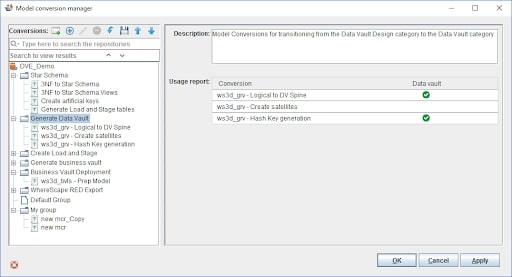
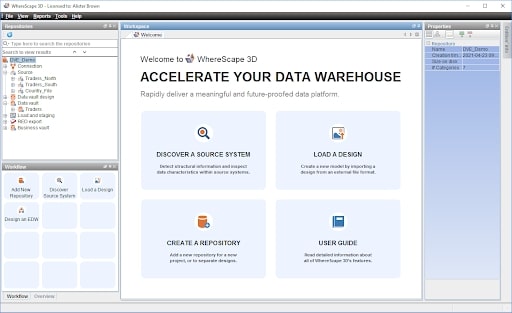
Our updated user interface and simplified layout provide new Search and Filter options to object trees and lists so users can quickly jump to the database, schema, table, or column they need. You’ll find new ways to manage large lists of Templates and Model Conversion Rules using our new search, filter, sort, and grouping options.
Pebble extensions

More variables available in Pebble templates

We have added the ability to use environment and user variables inside Pebble templates. Use the variables to change the functionality of a script:

  • When it runs in a DEV, QA, or PROD environment
  • Depending on which user is running it
  • Based on the time of day
  • To allow for quick changes by resetting environment or user variables

DataOps improvements

Integrate WhereScape with your CI/CD pipelines

A couple of enhancements to 3D will streamline your CI/CD DataOps processes!

  1. First, the merging of models and generation of reports in 3D can now be done through the command-line interface. Complementing the new command-line access to Model compare and merge, we have added support for generating delta models by providing the option to only retain items where changes have been detected. Automating these processes helps reduce errors and speed up time to delivery!
  2. Second, the execution speed of a number of Model Conversion Rules has been greatly increased, especially when working with remote repositories. Less time waiting on an hourglass means more time working on your data design: better design delivered faster!

You can read the Release Notes and download WhereScape 3D 8.6.7 here.

Building and Automating SQL Server Data Warehouses: A Practical Guide

Key takeaways: SQL Server warehouses aren't legacy; they're production environments that need faster build processes Manual builds scale poorly: 200 tables can equal 400+ SSIS packages, inconsistent SCD logic across developers Metadata-driven automation can cut...

Should You Use Data Vault on Snowflake? Complete Decision Guide

TL;DR Data Vault on Snowflake works well for: Integrating 20+ data sources with frequent schema changes Meeting strict compliance requirements with complete audit trails Supporting multiple teams developing data pipelines in parallel Building enterprise systems that...

A Step-by-Step Framework for Data Platform Modernization

TL;DR: Legacy data platforms weren't built for real-time analytics, AI workloads, or today's data volumes. This three-phase framework covers cloud migration, architecture selection (warehouse, lakehouse, or hybrid), and pipeline automation. The goal: replace brittle,...

How-to: Migrate On-Prem SQL Server to Azure

Migrating on-premises SQL Server to Azure shifts infrastructure management to the cloud while maintaining control over data workloads. Organizations move to Azure SQL Database, Azure SQL Managed Instance, or in some instances on-prem SQL Server on Azure run on virtual...

Data Governance in Healthcare: HIPAA Compliance Guide

TL;DR Healthcare data architects must integrate fragmented clinical systems (EHRs, PACS, LIS) while maintaining HIPAA-compliant lineage and clinical data quality. Data Vault modeling can help provide the audit trails regulators demand, but generates hundreds of tables...

Enterprise Data Warehouse Guide: Architecture, Costs and Deployment

TL;DR: Enterprise data warehouses centralize business data for analysis, but most implementations run over budget and timeline while requiring specialized talent. They unify reporting across departments and enable self-service analytics, yet the technical complexity...

Related Content